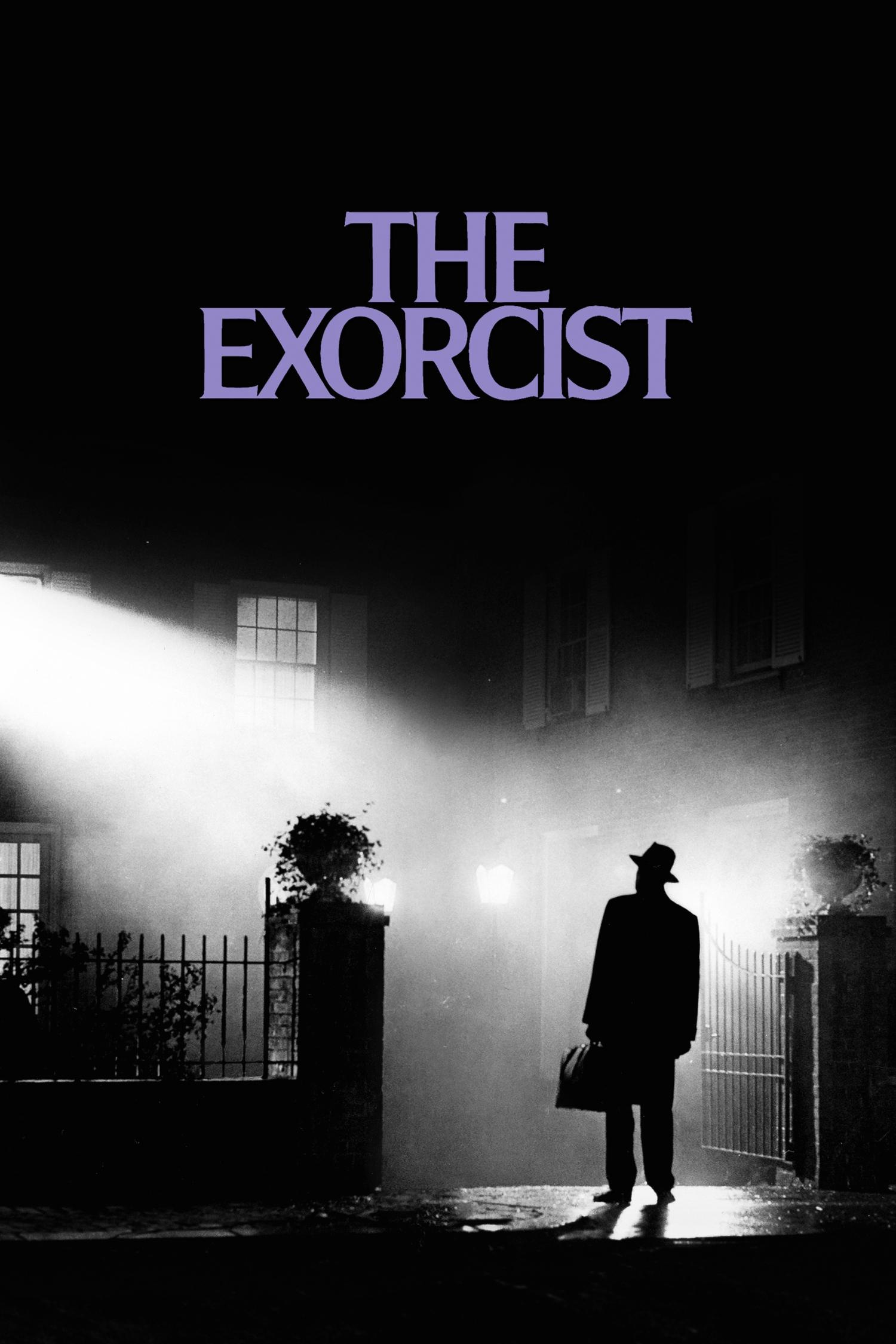
Cursed Movie Sets: The Exorcist (1973)
The dark reputation that grew around the making of The Exorcist
While researching my last article on possession, I found myself drifting off course and into another rabbit hole. This time, it led somewhere worth staying, haunted movie sets.
Throughout film history, cast and crew have spoken about things they could not explain. Knocking in empty spaces. Doors slamming on their own. Apparitions seen on set. Objects moving with no one near them. Sudden cold in sealed rooms. Equipment failures that kept happening in the same places.
These accounts usually seem to fall into two categories. In some productions, the location already had a reputation long before filming began. In others, the disturbances were linked by those present to the subject matter itself, especially when the film dealt with possession, haunting, or ritual.
That is what this short series will examine: the productions, the testimony, and the question of whether some sets were carrying more than cameras and cast.
The Exorcist was already an unsettling story on paper. Released in 1973 and directed by William Friedkin, it was adapted from William Peter Blatty’s 1971 novel, which drew on reports of a real-life exorcism case that had circulated for decades. The story followed the possession of a twelve-year-old girl, Regan MacNeil, and the attempt to free her through ritual exorcism. Even by the standards of its time, the material was unusually confrontational. It dealt openly with blasphemy, desecration, bodily violation, and the destruction of innocence within an ordinary home.
Did you know, the Exorcist is based on a true story?
The setting gave that material its force. A child’s bedroom, a staircase, the daily life of a successful actress and her daughter, these were ordinary domestic spaces, familiar and recognisable. Friedkin placed the horror there, in the routines and surroundings of modern life, which made the film harder to shake.
He pursued that atmosphere with force. He wanted performances that felt strained, physical, and real. Sets were built to control every detail. For certain scenes, temperatures were lowered to extremes so that breath would hang in the air. The production pressed constantly for discomfort, by design. Before stories of disturbances and misfortune began to gather around the film, the set was already shaped by tension, exhaustion, and material that many involved found deeply troubling.
That is the context in which the later accounts emerged, around one of the most disturbing films of its era, a production immersed day after day in possession, ritual, and sacrilege.
The set was an unlikely place for any talk of haunting; it was not an old house with a long history behind it. It was a purpose-built set, constructed specifically for the film. The rooms of the MacNeil home existed only to serve the production, built on a soundstage in a modern movie studio with cameras and lighting arranged, with the daily hustle and bustle of cast, crew, and technicians. Every part of it was artificial in the plainest sense. It had no inherited reputation, no folklore attached to it, no reason to carry a story before filming began. Whatever unease later attached itself to The Exorcist did not come from the set’s past.
The Exorcist carried a subject matter that many people viewed as spiritually dangerous. Possession sat at the centre of the story, surrounded by ritual, desecration, profanity, and the corruption of a child’s body and voice. The film pushed far beyond ordinary horror. Its most infamous scenes involved explicit blasphemy, obscene language directed at sacred figures, and acts designed to shock through sacrilege as much as fear.
For some within the Church, including priests involved in exorcism, The Exorcist dealt with material that crossed into spiritual danger. Blasphemy repeated for effect, the imitation of demonic behaviour, and the sustained staging of possession can be understood as more than performance. Some exorcists describe that kind of engagement as an invitation, a door opened through repetition, fixation, and irreverence. In that context, the events that gathered around the production were never going to be read as simple bad luck.
That context shaped how later events were understood. Once accidents, injuries, and disturbances began to gather around the film, they entered a production already saturated with ideas of evil, violation, and spiritual attack. The atmosphere of The Exorcist did not end when the camera stopped rolling. It hung over the set, over the people working there, and over the incidents that followed.
The Fire
The first major incident came while the production was filming the interiors of the MacNeil home. William Friedkin, the film’s director, was deep into shooting by this point. Ellen Burstyn had been cast as Chris, the mother drawn into the ordeal, and twelve-year-old Linda Blair was playing Regan, the child at the centre of the possession.
It was during this stage of production that the event most often cited as the beginning of the film’s darker reputation occurred. A fire broke out and tore through much of the MacNeil house set, causing serious damage and halting filming. Reports of the blaze quickly became part of the story surrounding The Exorcist, partly because the set had been purpose-built for the film and carried no history of its own, and partly because the damage appeared to totally spare Regan’s bedroom, the room at the centre of the possession scenes.
That detail became one of the most repeated elements in later retellings. At the time, the fire was a production disaster. It cost time, money, and momentum. In the years that followed, it came to be treated as the first sign that something around the film had shifted into darker territory.
The Darkness
As filming continued, the atmosphere on set began to change. What had started as an already difficult production, built around disturbing material and physically demanding scenes, took on a darker emotional weight for the people working inside it. The incidents surrounding the film were no longer being felt as isolated setbacks. Cast and crew began to speak of a real sense of unease, an oppressive mood on set, and a feeling that something negative had attached itself to the production.
That sentiment mattered because, in the view of many believers, darkness is drawn to darkness. The fire, the injuries, and the repeated misfortunes were troubling enough on their own, yet what gave them lasting force was how they were experienced by those closest to the production. People were spending long days immersed in possession, blasphemy, ritual, and degradation, then watching disruption and harm gather around the film in real life. For some, that created a sense that the boundary between performance and something darker had begun to thin.
The production was set back further by a series of injuries. Ellen Burstyn suffered a painful injury while filming the scene in which her character is thrown violently to the floor. The shot remained in the finished film, and her cry was real. Linda Blair, the twelve-year-old actress playing Regan, was also injured during the mechanical effects used to create the bed’s movements, leaving her with lasting back pain.
By this stage, the production’s darker reputation had moved beyond atmosphere and into physical harm. The set had already burned. Unease had already begun to gather around the film. Now the actors at the centre of it were being hurt as the production pushed further into scenes of possession and violence. For those who believed the film had drawn too close to something dangerous, these injuries deepened that conviction.
They were not the only injuries linked to the production. Elsewhere in the film, crew members were also hurt in separate accidents, including reports that a carpenter lost a thumb and a lighting technician lost a toe.
The Deaths
As the incidents surrounding The Exorcist continued to mount, the production’s reputation darkened further with a series of deaths that became tied to the film in the public imagination.
Jack MacGowran, the Irish actor who played Burke Dennings, died in January 1973, only a week after completing his scenes. He was 54, and reports at the time tied his death to influenza during the London flu outbreak.
Vasiliki Maliaros, the elderly Greek actress cast as the mother of Father Karras, also died before the film reached cinemas. Accounts describe her death as due to natural causes. Two performers from a film centred on possession and death were gone before audiences had even seen it, and that detail stuck with The Exorcist from then on.
The deaths linked to the production did not stop with the cast. Later accounts drew in the film’s night watchman, the operator responsible for the refrigeration system used to freeze Regan’s bedroom, and the newborn child of an assistant cameraman. Those deaths are regularly included in retellings of the production’s curse. However, the circumstances are usually given only in passing, and the causes are often left unspecified in the versions that circulate most widely. That lack of detail did little to weaken the story around the film. It had the opposite effect, adding to the sense of a production surrounded by loss.
Loss also reached the families of those involved. During filming, Linda Blair lost her grandfather. Max von Sydow, cast as Father Merrin, returned to Sweden after his first day of shooting when his brother died, causing further production delays. By then, the pattern people saw around The Exorcist had widened far beyond on-set accidents. Fire had already struck the production, injuries had already mounted, and now death was gathering around the people connected to it.
Church Intervention
With so much already hanging over the production, the filmmakers turned to the Church for help. Father Thomas Bermingham, a Jesuit priest who had been serving as a technical adviser on the film, was asked to intervene after the fire and the string of misfortunes had begun to unsettle those working on The Exorcist. William Friedkin wanted an exorcism. Bermingham refused. In his view, there was no basis for a formal rite of that kind, and he believed that performing one would only deepen fear on an already troubled set. Instead, he chose something quieter and more measured, a blessing over the production and words of reassurance for the people making it.
That distinction matters. An exorcism would have carried the full weight of confrontation, an open acknowledgement that something demonic had attached itself to the film. A blessing carried a different purpose. It was an act of protection, a way of asking for peace, calm, and restraint after a run of events that had begun to feel sinister to cast and crew. Bermingham’s response suggests that, even within a production immersed in possession and sacrilege, there were limits to what the Church was prepared to declare. Yet the fact remains that the set of The Exorcist had reached a point where a priest was brought in to bless it. That alone tells its own story.
Accounts of the blessing describe it as something attended across the production, not an isolated private moment for a handful of frightened individuals. Bermingham addressed the cast and crew together, offered reassurance, and blessed the set rather than turning the event into a spectacle. Max von Sydow, cast as Father Merrin, was among those present in later retellings, alongside the wider crew. The mood behind it was plain enough. A film built around demonic possession had already seen fire, injuries, disruption, and death gather around it, and the people inside that production wanted the weight lifted.
What makes the blessing so important in the story of The Exorcist is the way people later spoke about its effects. William Peter Blatty, who wrote the novel and produced the film, later said that once the blessing had taken place, the oppressive atmosphere lifted and nothing further happened.
Whether that was faith or a coincidence depends on the lens through which the story is viewed. For believers, it looked like intervention and protection. For others, it may simply have marked the moment when a production under extreme strain finally steadied itself. Either way, the blessing became one of the central episodes in the legend of The Exorcist, because it gave the sense that the film had crossed a threshold and that those making it knew they needed help from outside the studio walls.
Whether The Exorcist was truly haunted or dogged by extraordinary bad luck is a question that still hangs over the film more than fifty years later. Sets burn. Actors get hurt. People die. Tragedy and accidents are not unknown in film production. Yet the weight of what gathered around The Exorcist, the fire, the injuries, the deaths, the oppressive atmosphere, and finally the decision to bring in a priest to bless the set, has always felt like more than an ordinary run of misfortune.
Perhaps that feeling comes from the subject matter itself. A film so deeply immersed in possession, blasphemy, and sacrilege was always going to draw a different kind of scrutiny when things began to go wrong. Every accident carried a darker meaning. Every loss seemed to fit a pattern. By the time production ended, The Exorcist had acquired a reputation that no ordinary horror film could easily shake.
Coincidence remains the safest explanation. It always does. But in this case, the string of bad luck has long seemed too concentrated, too unsettling, and too perfectly matched to the film’s subject to be dismissed without hesitation. That is why the story has endured. Not because it proves anything beyond doubt, but because it leaves behind the same uneasy question that haunted the production itself, whether something had gathered around the film, or whether the people making it had simply looked into darkness for too long and begun to feel it looking back.


