


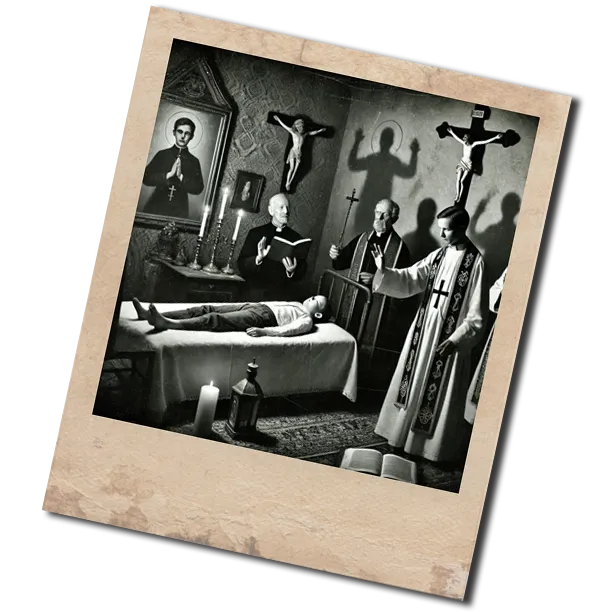
It began, according to the story told later, with a Ouija board.
In January 1949, a thirteen-year-old boy from Cottage City, Maryland, known for decades under the pseudonym Roland Doe, was drawn into one of the most famous possession cases in American history. Those closest to him said the trouble began after the death of his aunt Harriet, a spiritualist who had introduced him to the board and encouraged an interest in spirit communication. In the days that followed her death, he is said to have used it himself, hoping to reach her. That detail became central to everything that followed. For many within the Church, and for later writers who examined the case, the board was treated as the point of entry, the moment a door had been opened.
The first reports were domestic and unsettling. Scratching sounds came from inside the walls. Furniture moved. The boy’s mattress shook during the night. These were the kinds of disturbances that left a family frightened and searching for an explanation, yet still close enough to ordinary life to invite doubt. That changed as the activity gathered around the boy himself. Witnesses described him entering trances, speaking in altered voices, and reacting violently to prayer and sacred objects. Scratches and welts were said to appear across his body, at times forming words that those present read as signs of something hostile at work.
What gave the case its staying power was the sheer range of phenomena later attached to it. Those involved described violent outbursts, strength beyond what they believed a boy of his age should have possessed, and movements of the body that struck them as unnatural and deeply disturbing. During prayers, furniture shifted, chairs overturned, and religious objects were said to move or fall. Some accounts pushed further still, describing levitation, guttural voices, blasphemies, and the use of languages the boy had never formally studied. In isolation, any one of these reports might have been argued away. Gathered together, they formed the core of a possession narrative that would become one of the most influential in the twentieth century.
The family first looked for help outside the Catholic Church. Medical and psychiatric examinations failed to provide an explanation that satisfied those involved in the case. A Lutheran minister became involved, then Catholic clergy were approached as the disturbances continued. The early Catholic response centred on Father Albert Hughes in Washington, D.C., who attempted an exorcism at Georgetown University Hospital. That attempt ended violently. During the rite, the boy reportedly broke free enough to tear a spring from the hospital bed and slash Hughes across the arm. Blood was drawn, the priest was injured, and the session was abandoned. That moment hardened the sense that those involved were confronting something dangerous.
The case then shifted to St. Louis, where relatives took the boy in, and a group of Jesuit priests assumed responsibility for the intervention. Father William Bowdern became the leading figure in the exorcism, assisted by Father Walter Halloran and Father Raymond Bishop, whose notes would later play a major role in keeping the story alive. Here, the case moved fully into the form in which it is now remembered: long nights of prayer, exhaustion, restraint, shouted blasphemies, sudden violence, and clergy trying to hold together both ritual order and physical control as the boy convulsed and resisted. The sessions continued over weeks. The work was gruelling, repetitive, and draining, the kind of prolonged ordeal that left a mark on everyone in the room.
Accounts from St. Louis gave the case its most enduring images. The boy was said to writhe in the bed, spit, curse, and lash out at those around him. His voice was described as changing. Words and scratches appeared again on his skin. Those present wrote of foul smells, sudden cold, and an atmosphere that seemed to thicken as the rites intensified. Whether these details are read as evidence of possession, the effects of fear and suggestion, or the product of later retelling, they are the elements that fixed the case in public memory. The priests themselves treated the struggle as real, and that alone gave the events a seriousness that separated them from ordinary ghost stories.
The case reached its final and most dramatic point in April 1949. During the closing phase of the exorcism, the boy was said to have emerged from a trance and declared, in a clear and forceful voice, that Saint Michael had defeated the demon. Shortly afterwards, the room fell quiet. The violence ceased. The rites were deemed successful. For those present, that silence carried enormous weight. It marked the end of weeks of confrontation and the close of a case they believed had brought them into direct conflict with something malevolent.
For years, the story circulated in fragments, through clergy, rumour, and later investigation. The case might have remained an obscure entry in religious archives had it not reached William Peter Blatty, a student at Georgetown University who later used it as the basis for his novel The Exorcist. Published in 1971, then adapted for film in 1973, Blatty’s version changed names, gender, and setting, yet retained the core pattern: a young person, spirit contact, possession, failed medical explanations, and a final battle carried out through Catholic ritual. Through that transformation, the Maryland and St. Louis case entered popular culture and became the model against which all later possession stories would be measured.
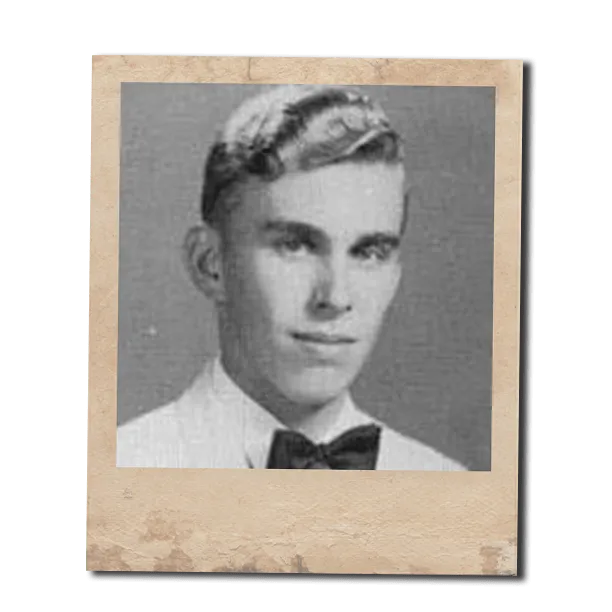
The identity of Roland Doe remained hidden for decades. Later investigations identified him as Ronald Edwin Hunkeler, who went on to live a long and accomplished life, working as a NASA engineer and building a future far removed from the events that had once surrounded his name in secrecy. That later life gives the case an ending very different from the darkness of its central episode. Whatever happened in 1949, it did not consume the rest of his life.
That is one reason the story has endured. It begins with an invitation made in ignorance, passes through fear, violence, prayer, and the conviction that something had taken hold of a child, then closes with recovery and silence. Whether the case is read as possession, misinterpretation, religious theatre, or a mixture of all three, it remains one of the defining modern accounts of spiritual crisis. Its power lies partly in the claims themselves and partly in the fact that those claims were taken seriously by the people closest to them. Long before The Exorcist reached the screen, the shape of that story was already there: a boy, a family in fear, a Church called in, and a struggle presented as a battle for the soul.
Demons are real they inhabit the weakest of souls even the innocent if you open just a crack Satan will jump in don't dabble in the occult
It sounds like Ronald's family was Lutheran. Do we know if he converted to Catholicism afterward?